
SEO Has Changed Forever
reviewed by key account manager Honza Zimovčák.
Marcus from Searchmetrics answered the question How has search changed? His talk was built on the idea of search flexibility — search results adapt to the query and the specific user's situation. Not just in terms of content, but also its form: you can find a video, photos, or a short text. He backed his hypotheses with data from 600 different websites. Marcus explained the biggest shift in search engines in the form of so-called ranking factors. These ensure evaluation not only based on keywords, but also based on the user's situation.
"The talk accurately captured the current state of SEO and the direction it's heading," says Honza. "It confirmed my view that SEO is not dead — it has just changed. We really need to know our customers well, their problems and the situations they're dealing with. Current SEO is definitely no longer just about repeating one keyword on one page."
Tip: Check out the same presentation from the talk "Why user-focused content is the death of ranking factors".
At Proof & Reason, we conduct research on important search queries with specific users to understand the situations in which they ask them. This ensures maximum relevance of the content we create and thus high discoverability.
How I learned about effective marketing from Bugs Bunny, Pixar and a cat from Japan,
a talk by Michal Pastier, creative director of Slovak agency Zaraguza, which most impressed Tereza Kosnarová, Head of Research & Design.
Michal's talk aimed to show the audience how to create great viral campaigns. He used the Kofola campaign as an example — Zaraguza managed to create ads that make people feel happier and more engaged than Super Bowl ads (according to a study by EmotionID). Additionally, five videos from this campaign ranked among the 10 most-watched videos on Czech YouTube in 2015.
How to achieve this?
- Create a great character. You can best find inspiration from Pixar. Determine what position makes your character feel great and comfortable. Then pull them out of that comfort zone — give them a challenge, get them into trouble.
- Think carefully about their motivation. Everything the character does must be consistent with this motivation. Allow them to cheat. All of this will help you evoke the desired emotion in the ad's recipients.
- A truly powerful story doesn't need a copywriter — think of Road Runner and his screenplay.
But how do you measure a campaign's success? A specific experience isn't measurable — even you yourself can't describe it precisely in retrospect. What determines how we remember a given situation is two moments: the most intense moment of the experience (the peak) and the end of the experience. All successful Kofola ads are built on Daniel Kahneman's Peak-End Rule.
OVACOPI
in its milestone 10th edition closed the first day of the Festival. Lenka Wehrenberg from Zoot, Adriana Šnajdrová from Tchiboblog, and Stanislav Gálik were invited, closely listened to by copywriter Lukáš Šaněk.
We were reminded that the rules and conditions of our services can be set as an advantage — there's then no need to look for ways to circumvent, hide, or individually change them. Another important aspect is to play fair and treat customers and users with the respect we want to receive from them.*
It's important for content to bring users something new, valuable, and unique. At the start of any good content strategy should be the question "Who are we writing for?", which helps define topics, but also the tone and overall direction. Watch out for product photos and inauthentic copy — your readers are sensitive to this and demand original content.
"OVACOPI was a great end to the first day of the festival, full of practical experience and advice. Most of it a good copywriter already knows, but the value was seeing it placed in real, working examples," Lukáš shared his enthusiasm.
Avast Upsell Campaign A/B/C/D Test
A case study presented by Michal Pařízek from Avast, where they wanted to find out how a simple change in offer copy could affect the interest of potential customers.
At Avast, they conducted A/B testing directly in their application on an impressive sample of 797,737 people from the UK, USA, Canada, and Australia. By testing a simple pop-up window, they found that simply changing the pop-up headline from "Special Offer" to "Loyalty Reward" increased the conversion rate by 28%.
They also found that a time-limited offer still motivates more people to buy, even though they are surrounded by similar offers every day. The time pressure increased the conversion rate and sales by 24%. Testing shows that loyalty- and reward-focused campaigns work better than the classic sales approach.
Speaking Up for Experiences
by Stephen P. Anderson, which captivated Tomáš Svěrák, UX designer.
Stephen said that designing user experience has a lot in common with designing all games. Why?
- Game design has a clear focus on just one specific experience. They define the goal they want to convey to the user and concentrate on that.
- A sophisticated approach to using emotions, especially surprise and the joy of playing. Game design has a head start — what we're just starting to do in UX, game designers figured out 20 years ago.
- They use a systems perspective and focus on the whole, not just the parts.
"In our team, we pay a lot of attention to emotions. One of the methods we use is mapping the user experience journey, which Tereza Kosnarová presented at this year's WebExpo in her talk How to Design Meaningful Products?," Tomáš reminded us.
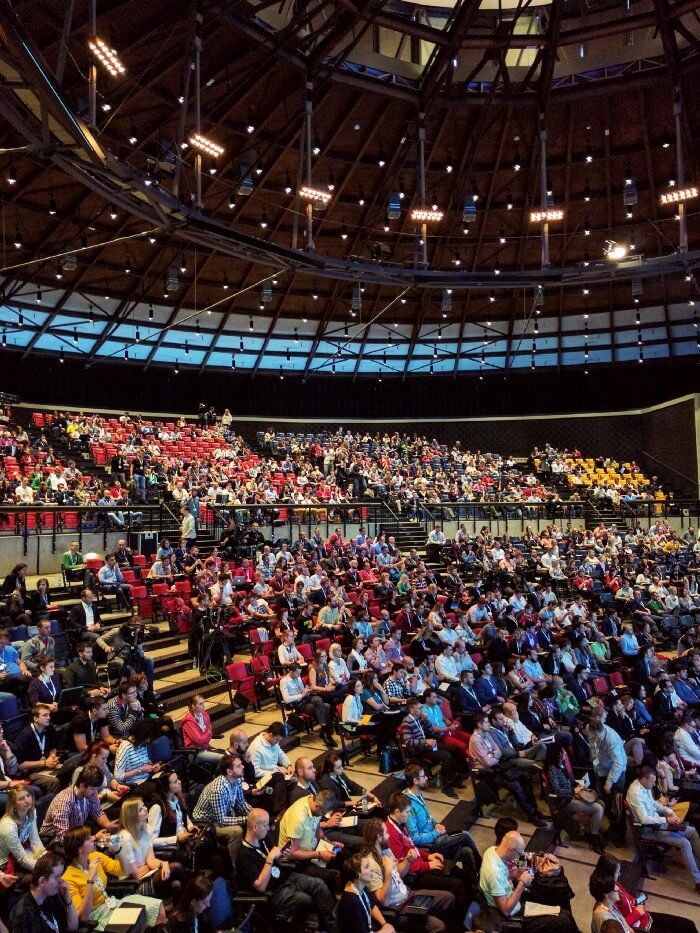
We'd like to thank the Marketing Festival organisers for putting together a conference that once again brought together hundreds of professionals from around the world. It also gave us the opportunity to meet some of our clients, including representatives from Zážitky.cz and Copy General. See you next year! #mktfest
*No asterisks needed, then.