
What is the biggest obstacle for companies to work more with research and its results?
➡️ Clients are often too detached from the research. There's the briefing, then the research in a "silo", and finally they receive a shared report. Because they're not present during the process, they don't internally "buy into" the results and don't have sufficient confidence in them.
➡️ On top of that, agencies often deliver outputs in the form of standardized reports which make their work easier, but every company needs to work with data differently.
"Research doesn't belong in a drawer. The hardest work begins after it's done."
Why do you think companies so often don't work with research outputs correctly?
1️⃣ First, information overload. Clients often receive a fifty-page report packed with numbers — without analytical know-how, they get lost in it and can't find answers to their questions.
2️⃣ And then there's a feeling of complexity. When data is too raw and poorly understandable because it doesn't reflect the goals and problems that led clients to commission the research in the first place. For the client, it then becomes psychologically easier to "put the research in a drawer" than to wade through it.
So what should proper research outputs look like?
➡️ We are primarily designers — unlike purely research agencies — and we reflect this not only in interpreting research but also in how we construct it.
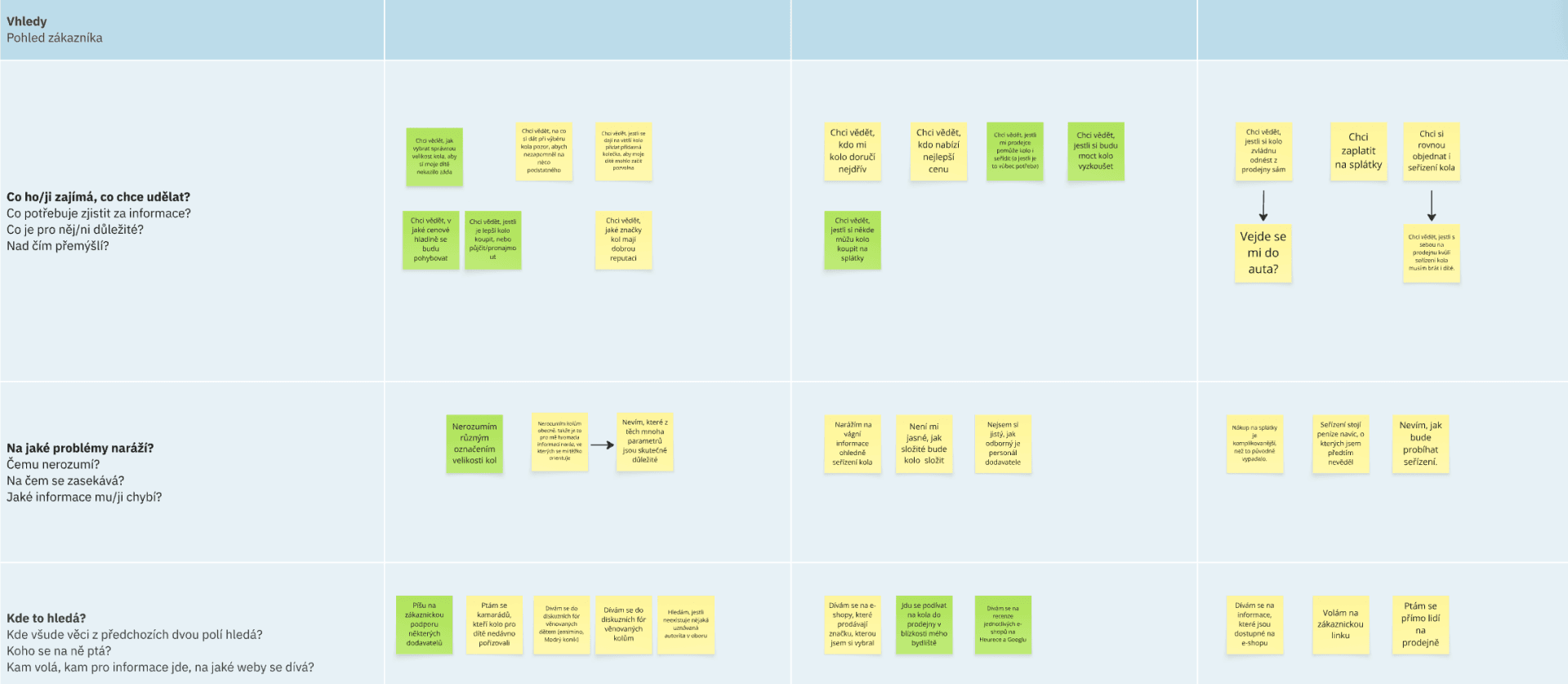
➡️ We bring the voice of the customer into reports — direct quotes, test recordings, or video clips — so the client can see the emotions and real behavior of customers.
➡️ We don't hand over outputs to clients according to a universal template. We design them to fit the workings of the specific company and thus become a natural part of how it operates.
➡️ Every client also receives our consulting support, which helps them overcome the initial blocks in using the outputs.
How do you prepare outputs so clients can continue working with them?
1️⃣ We look for an output format the client will be able to use, get the most out of, and that will fit into their processes. Research can directly serve as the basis for prioritizing a roadmap for the next period, giving the data immediate practical relevance.
2️⃣ We embed data into frameworks such as customer journey maps, Value Proposition Canvas, or Jobs to Be Done scenarios. Outputs can take the form of interactive dashboards or presentations, but they must always correspond to what the client actually wants to do with them.
What do you do to make research outputs more actionable for clients?
➡️ At the start of a collaboration, we establish context. Already during the briefing and throughout the research, we work out who the data is for, what processes the team operates within, and what decisions they want to make based on it.
➡️ And we stay with the client after the research is done. Following the handover, we schedule fixed follow-up consultations with the client (e.g., after a week or a month), at which we check whether and how the research is being integrated in practice.
How can you as an agency help clients "sell" research outputs internally within the company?
For example, by preparing data for different roles within the company — executive summaries for C-level, marketing models (such as See-Think-Do-Care) for marketers, and user scenarios for the product team. We try to adapt outputs to formats people in the company already know and regularly use, which makes it easier for them to be accepted internally.
In what types of projects do you feel most in your element?
I enjoy complex problems. The most interesting challenges are those that aren't clear-cut and require deeper thinking about how to even approach them. Projects with strict regulatory constraints or a very hard-to-reach target group are also a significant challenge. In short: when I can break down complex things into their basic components so we can build a new solution that truly makes sense.
This interview was originally published in issue #8 of CX Space News on LinkedIn
Join 400+ other subscribers and don't miss the next issue (coming in May)