Key takeaways from the article:
- 9 of the 12 e-shops we tested, with annual revenues over 150 million, had a problem in the checkout process that caused at least one respondent to abandon their purchase.
- Payment issues and a slow website were the most common obstacles that led customers to stop their purchase.
- Many pieces of information that contribute to a better customer experience — such as addresses or opening hours of pickup points — are present on the e-shops' pages, but buried so deep that customers can barely find them.
How to retain customers in a fiercely competitive market
At a time when customers can choose from thousands of e-shops and e-commerce is constantly growing, outstanding customer experience (CX) is one of the main factors that will convince them to buy from you specifically. More than two-thirds of companies now compete primarily on the basis of customer experience — in 2010 it was only 36%. Underestimating CX can have a major impact on your business. Customer experience and your customers' emotions need to be consistently and continuously worked on. The absence of negative feedback absolutely does not mean customers are satisfied. Only 1 in 26 dissatisfied customers will file a complaint. The rest leave and likely never come back.
And what's an even worse scenario? According to former SAP CX director Esteban Kolsky, 72% of customers will share a positive experience with 6 or more people. But if a customer is dissatisfied, 13% of them will tell an average of 15 or even more people. A PwC survey mapping the opinions of 15,000 customers also revealed that nearly one in three stops buying from a favourite brand after just one bad experience. And more than that, up to 92% would completely abandon a brand after 2 or 3 negative experiences.
The gap between the top and the average in e-commerce is visible
According to studies by Baymard Institute or Littledata.io, only 30–45% of customers on average complete the checkout process. The e-commerce projects we work on, however, consistently achieve a completion rate of over 70%. The question "Why can't everyone achieve this?" led us to find out for ourselves through our own study.
We tested e-shops across various categories in Czech e-commerce: Alza, Altisport, Baťa, Baumax, Elnino, Grizly, Jysk, Luxor, Mobil Pohotovost, Siko, Sparkys, and Teta. And the results?
9 of the 12 tested e-shops with annual revenues over 150 million had a problem in the checkout process that caused at least one respondent to abandon their purchase.
What e-shop mistakes forced customers to abandon their purchase
The full study contains 13 main sections and 82 identified problems. We've prepared a detailed description of 4 major issues that will help you achieve higher conversions. You can review the remaining 78 problems in the complete report, which we'll send to you free of charge by email.
Pickup point information and delivery pricing
Customers expect you to make the entire purchase process easier for them. This also applies to delivery options and pickup points. Unfortunately, some e-shops actually made finding these harder.
For one respondent, this even led to abandoning the purchase. After wanting to have their order delivered to a Baumax store in Brno and selecting in-store pickup, they were unable to find from the store list where the Brno branch was located.
"And there was no street address, nothing at all — so you don't even know where to pick it up."
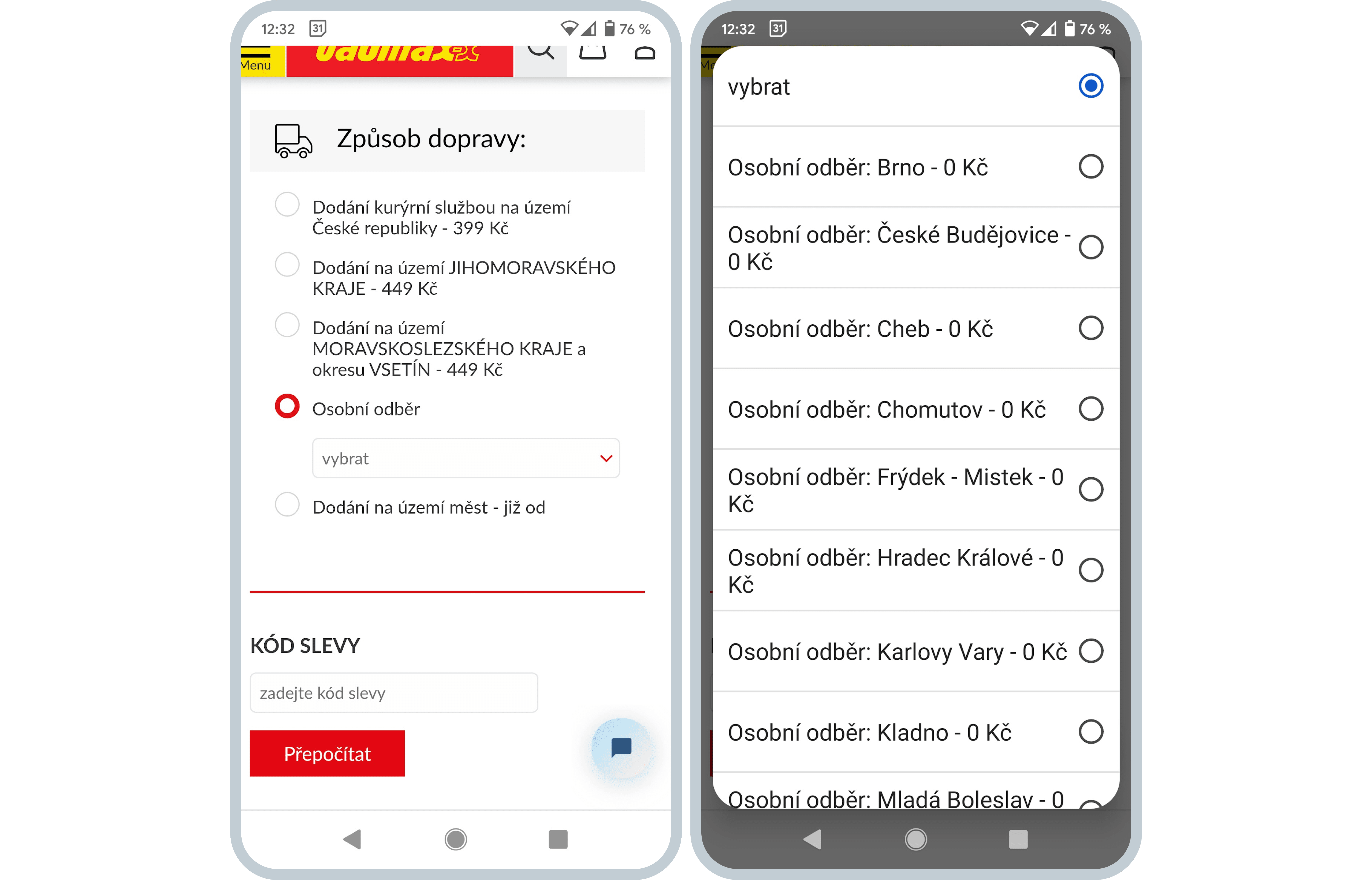
Another respondent ordering from Mobilní Pohotovost even had to leave the website and search for Prague pickup point addresses on Google. It was similar at Jysk, which showed store addresses but forgot to include opening hours.
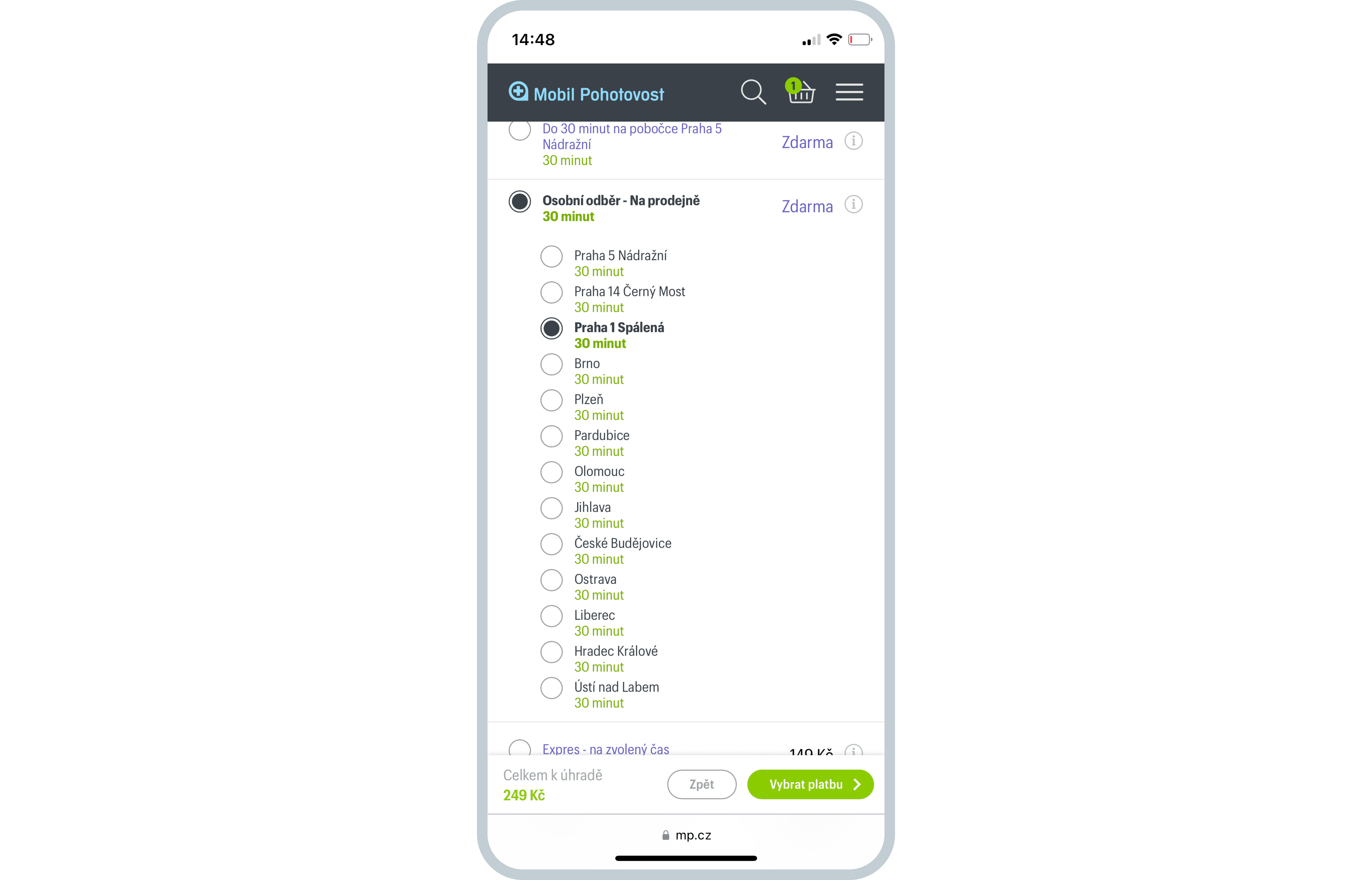
Customers were missing basic information about pickup points — most often a precise address, opening hours, or a clear map to easily navigate to the store. And when a shop had multiple branches in one city, they emphasized how important it was to clearly identify each one to avoid confusion.
Many e-shops do have this information on their pages, but it is buried so deep that customers can barely find it. They rely on people remembering or finding it somewhere else. This approach often leads to unnecessary confusion and a loss of customer trust.
Sometimes all it takes is making things easier to find, and it can save you hundreds of thousands — as it did for our client E.ON Distribuce. People repeatedly called the customer helpline because they didn't know what to do on the website or couldn't find something. Information was poorly labeled, and help texts were hidden under additional documents for download. We adapted the website to meet users' needs, and the result? Easier discovery of target pages and 20% fewer requests to the call center.
Read more about our approach and results in the case study: We made key pages 48% easier to find and saved hundreds of thousands in call center costs.
Problems during the checkout process also arose around delivery pricing. Respondents couldn't understand the large price differences between Zásilkovna and Balíkovna, and the extreme pricing of Baumax's own delivery service.
Most customers also expected in-store pickup to be free. However, Teta, Alza, and Siko charged for it — which caused some respondents to abandon their purchase.
"I don't get it — if I pick it up in-store where they have zero effort, I'd expect it to cost zero."
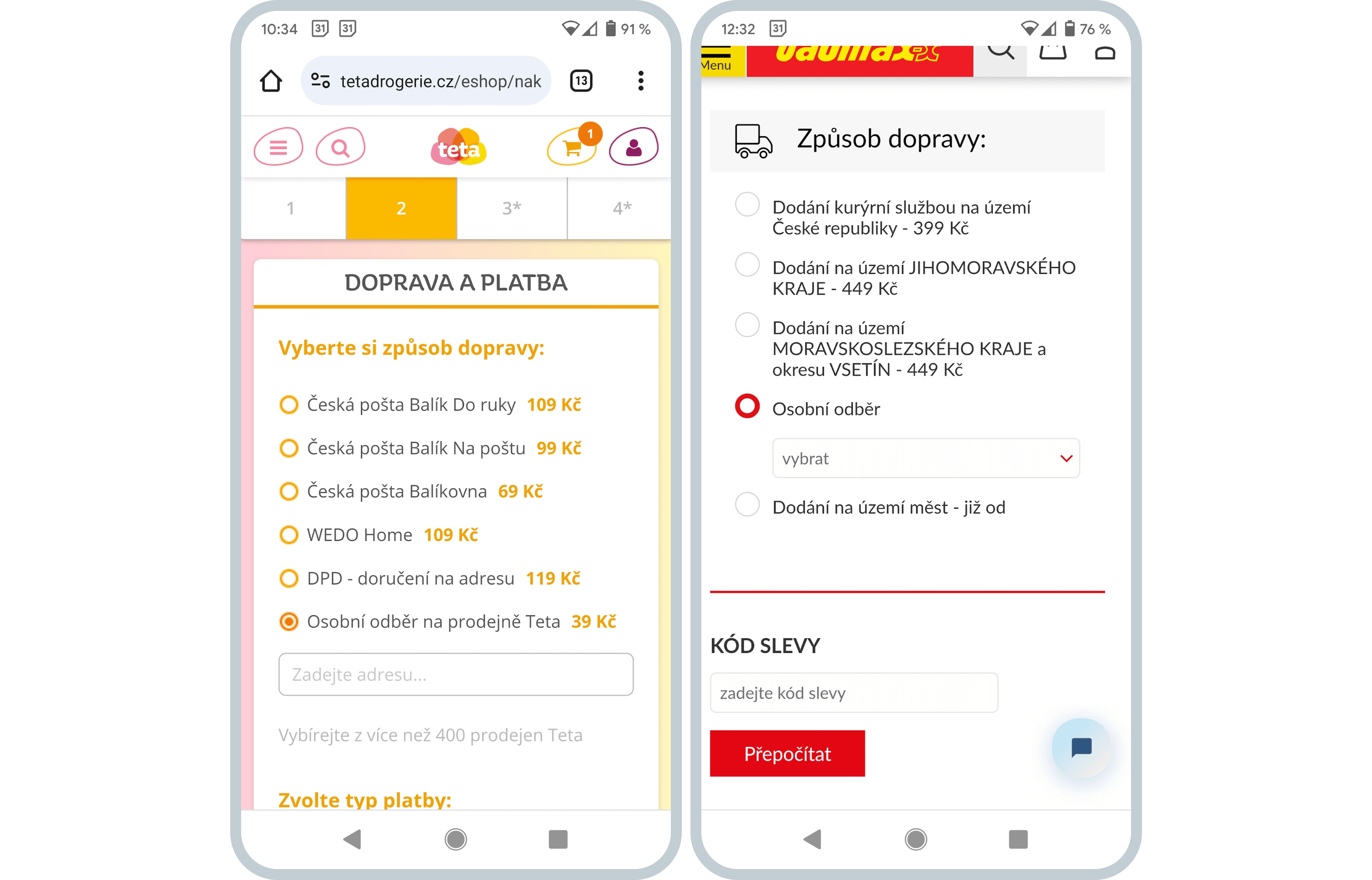
When people see that delivery is handled directly by the store, they expect it to be cheaper or even free. That's why they find it odd to pay for in-store pickup or Alzabox collection, even when the price is the same as Zásilkovna.
Product availability information
Products that can't be ordered, no information about restocking dates, or missing information about the number of items in stock — factors that worsened the user experience enough that one respondent abandoned their purchase. When a customer twice failed to find a product they wanted to buy on the Jysk e-shop, they lost patience and stopped shopping there.
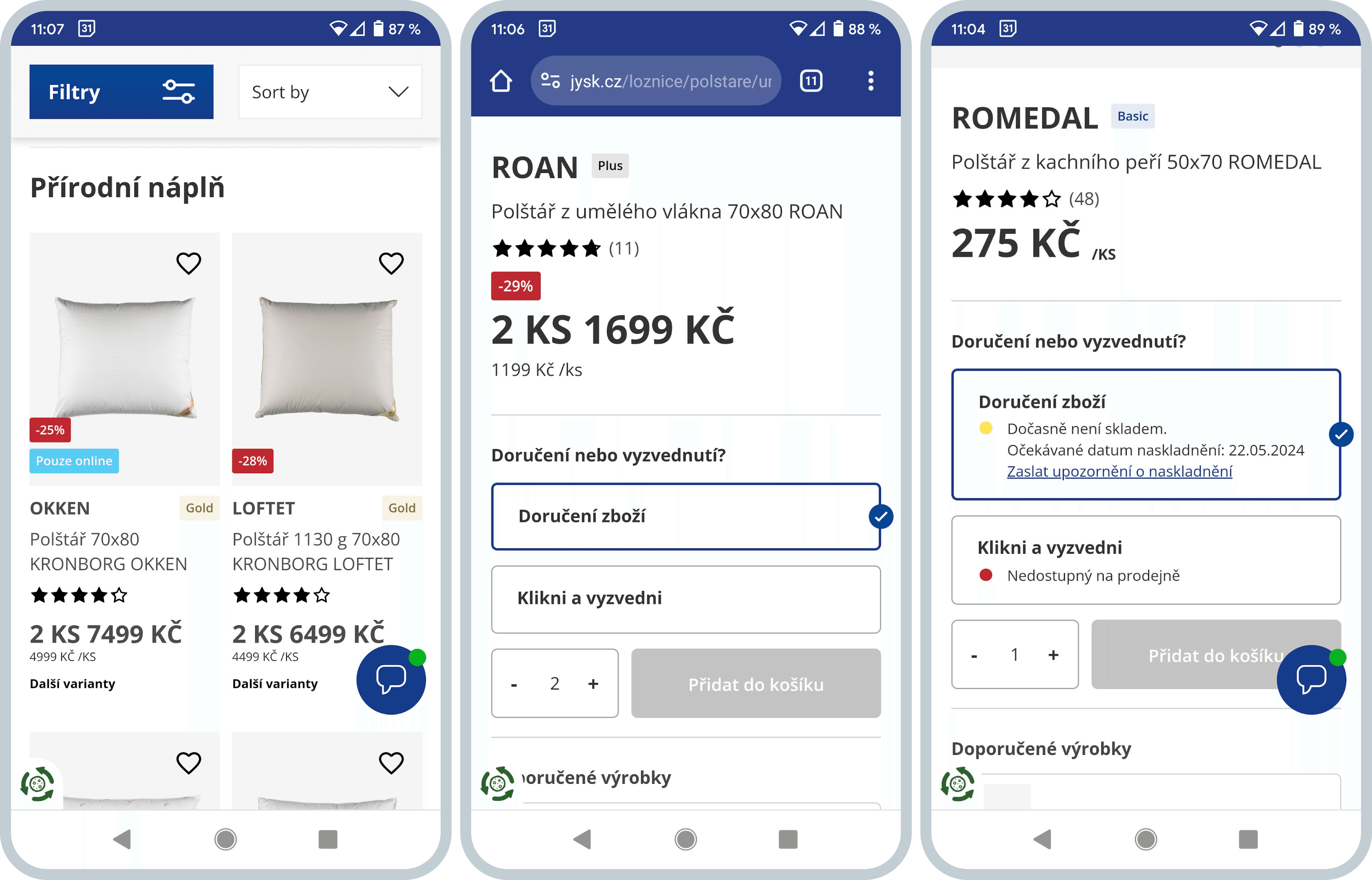
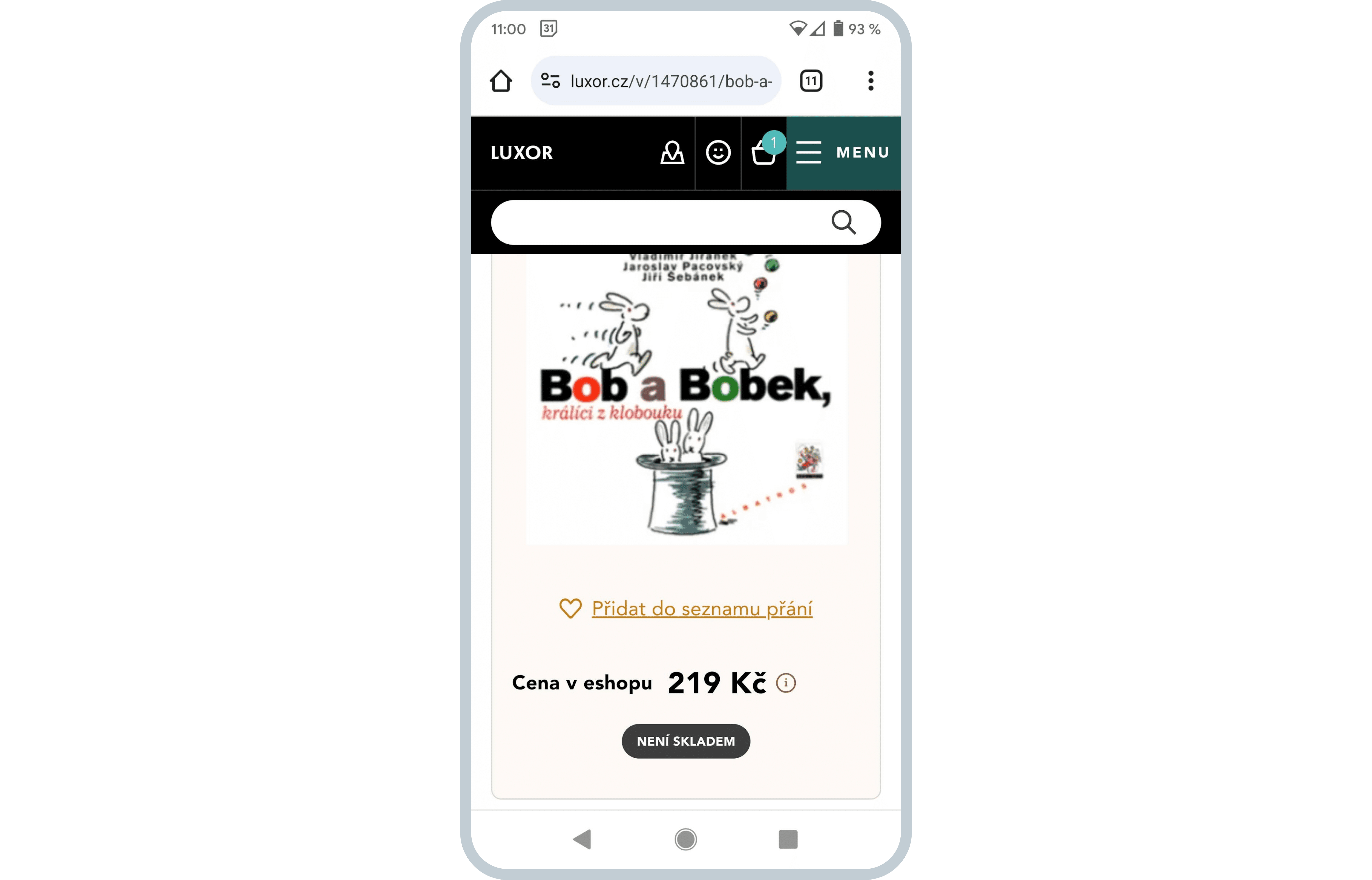
At Luxor, a respondent was looking for a book that turned out to be out of stock. What they couldn't find was any information about whether it would be restocked soon, or where they could set up an email notification for when the book was available again.
"I'd want to know if it's available in a store somewhere, or a date for when it will be in."
Baťa even let a respondent add a product to their cart, only to then ask them to remove it because it was out of stock.
The research confirmed that customers didn't perceive availability as a simple "in stock or not" state. They expected comprehensive information about when the product would be available or restocked, and how many units were available both online and in stores.
Payment problems
A significant number of customers didn't complete their purchase due to a slow website and payment issues. They were frustrated by errors in communication between the payment gateway and the e-shop, and by having to pay in a different way than they had selected.
For example, a respondent shopping on the Grizly e-shop was first redirected to confirm the payment in their banking app, but found no prompt there. They tried a different payment method, but the system returned an error and asked them to contact their bank. When they wanted to try a different card and went back to the cart, it was empty. And so they gave up on the purchase.
"I simply don't know how to pay."
And what happened at Teta? Instead of a confirmation that the payment went through, the customer ended up back on the product page. When they checked their cart, it was empty. They wanted to at least check their email for confirmation, but found no order or payment confirmation there either.
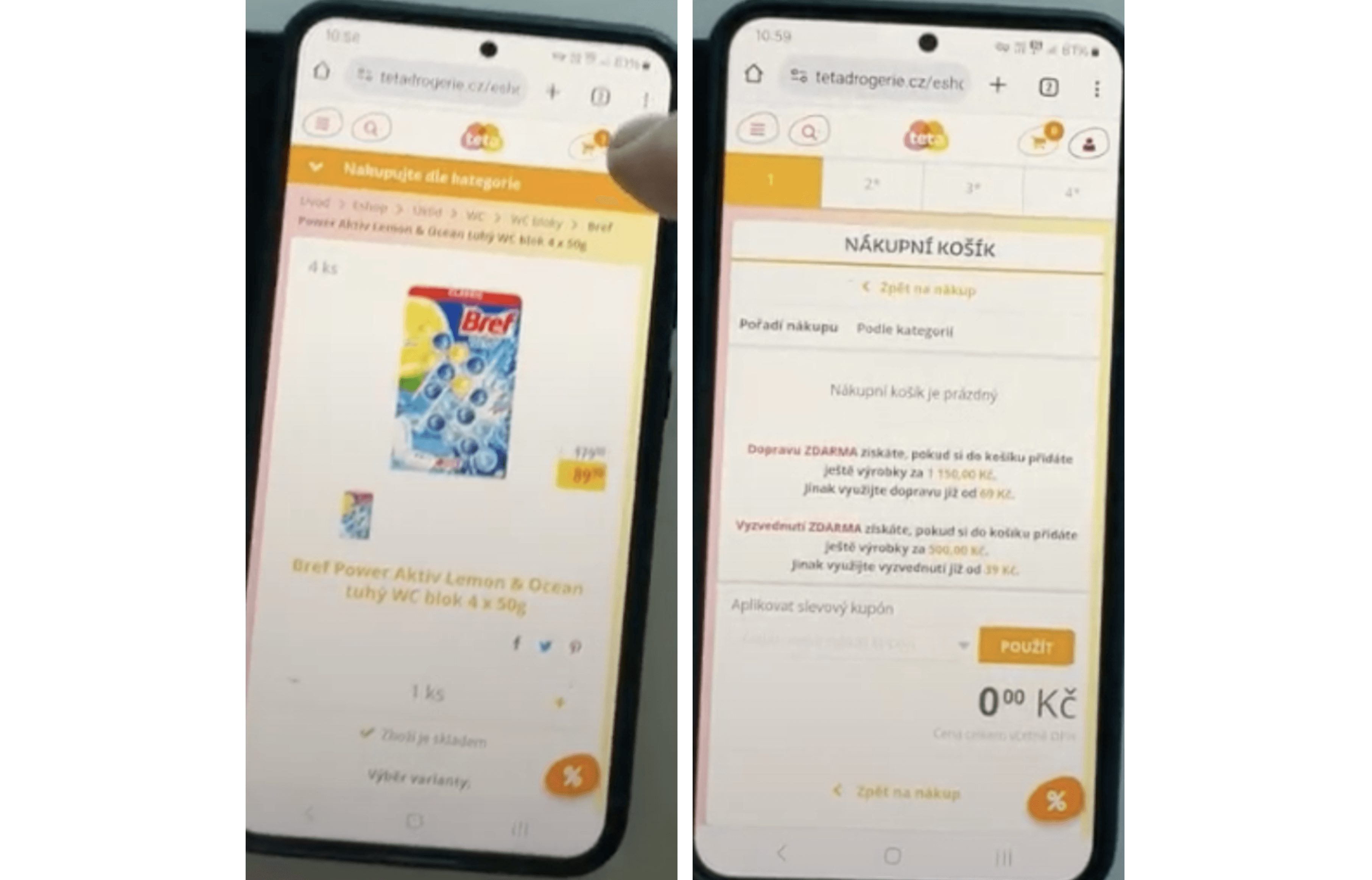
The exact causes of payment errors can't be definitively determined from the tests, but the fact that respondents succeeded on one website and failed on another with the same payment details shows the problem wasn't on their end. Shops often displayed unclear error messages or even interrupted the purchase and cleared the cart without offering a solution.
Avoid the same mistakes and you'll be rewarded with higher conversions and better customer retention
If you want your e-shop to earn money in the long run, outstanding customer experience is non-negotiable in e-commerce. This is confirmed not only by our long-term collaboration and the success of the Top-obaly e-shop, but also by the results of the study itself.
But if you don't know what will delight your customers and what will put them off buying, help yourself by mapping the customer journey or conducting secondary research on your target audience. We've covered both topics in more detail in other articles on our blog:
We'll Send You the Complete Czech E-commerce CX Study Free of Charge
It contains 78 more problems described in detail. You'll see screenshots of bugs directly on respondents' phones and learn the likely causes of each individual issue.
I want the complete report
The study doesn't focus on specific solutions to individual problems. It serves as a valuable source of inspiration. Through the described problems, you can fix issues on your e-shop and increase conversions and customer satisfaction.